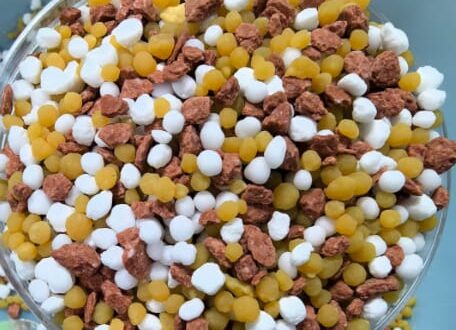
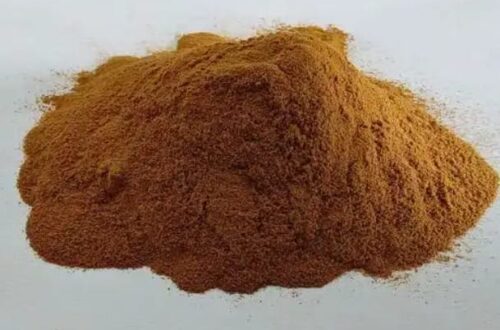
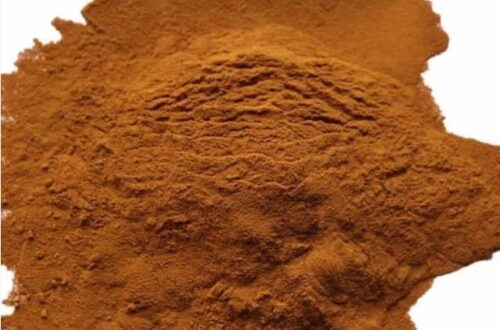
In terms of agriculture, whether it is water-soluble compound fertilizer or non water soluble compound fertilizer, its principle of action is the same. And this non water soluble compound fertilizer filling material is only used to reduce the concentration of fertilizer, and this filling material has no nutritional components, usually talcum powder, bentonite, etc. And these fillers also have other functions, which are to use these materials to make compound fertilizers into granular form. Normally, the compound fertilizers we see are also in granular form. However, water-soluble compound fertilizers are different. They exist in liquid, granular, and powder states, and their main properties are solubility in water without impurities.
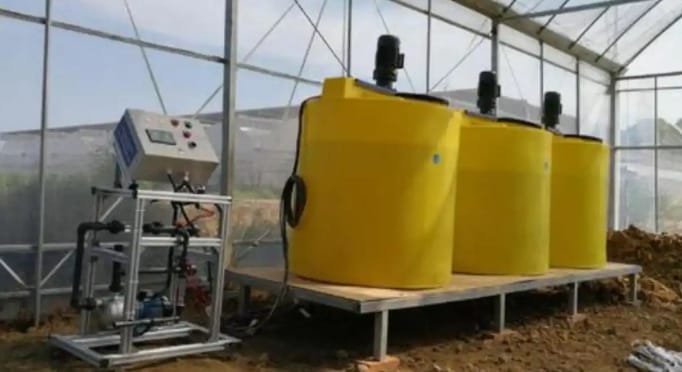
The characteristics of water-soluble compound fertilizer are that its usage is very large in the entire agricultural fertilizer industry. For this water-soluble compound fertilizer, its function is the same as that of traditional compound fertilizers, but there are significant differences in its use. The key to water-soluble compound fertilizers is their solubility in water and the absence of particulate matter. Because water-soluble compound fertilizers require a drip irrigation system for fertilization, if there are particles in the water-soluble compound fertilizer and they are still relatively large. Blocking the nozzles of the entire drip irrigation system not only prevents effective fertilization, but also affects the use of the entire drip irrigation system, which can cause great trouble.
The biggest characteristic of water-soluble fertilizers is that they must be completely dissolved in water. In the water-soluble compound fertilizer market, liquid compound fertilizers, granular compound fertilizers, and powder compound fertilizers are basically common. According to production standards, these three forms of compound fertilizers can quickly dissolve in water without the formation of particulate matter. When using this compound fertilizer, if other water-soluble fertilizers need to be mixed, it is important to pay attention to whether they react with other fertilizers, which may form particulate matter. This is often a problem that occurs during the use of various water-soluble fertilizers. For friends who use water-soluble fertilizers, it is important to focus on whether there will be any related chemical reactions. Among them, especially the reaction of calcification, it is basically in granular state
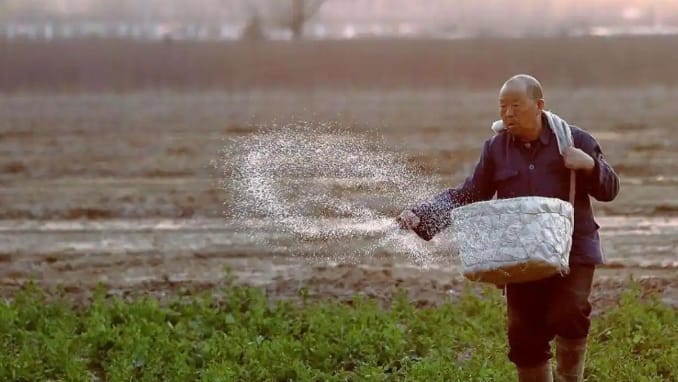
The role of non water soluble compound fertilizer fillers is easier to understand, which is the traditional compound fertilizer. It is also in the form of particles, and the main methods of use are manual scattering or mechanical fertilization. For these two methods of fertilization, manual scattering is roughly uniform, and each person’s technique is different, so the fertilizer applied is also different. Although mechanical fertilization can control the application rate, the application rate is mostly based on experience. In order to control the amount of fertilizer applied, relevant fillers are added during the fertilizer processing, which have no fertilizer effect and can be basically understood as solidifying agents, forming a granular state. The filling material is mainly composed of clay and talcum powder, both of which are relatively fine and sticky. Its function is to bond materials for easy granulation, and another is to dilute and fill balanced fertilizer nutrients. For my simple explanation, it should be easy to understand.
Summary: Water soluble compound fertilizer is mainly used in integrated water and fertilizer systems, and its biggest requirement is that there should be no particulate matter produced, otherwise it will block the sprinkler heads of the drip irrigation system, and in severe cases, the entire drip irrigation system will be paralyzed. The traditional use of compound fertilizers can be achieved by simply scattering them in the field. Compared to ordinary compound fertilizers, water-soluble fertilizers have their own uses and belong to different fields. In terms of price, water-soluble fertilizers are higher than ordinary compound fertilizers. The key to this question is to understand what water-soluble fertilizers are and the difference between them and traditional fertilizers.