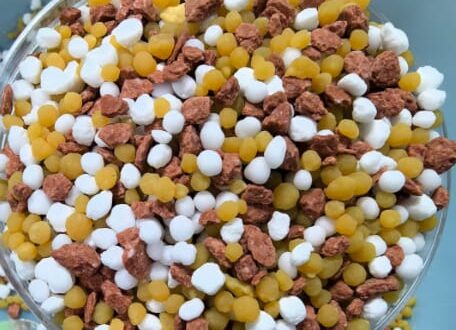
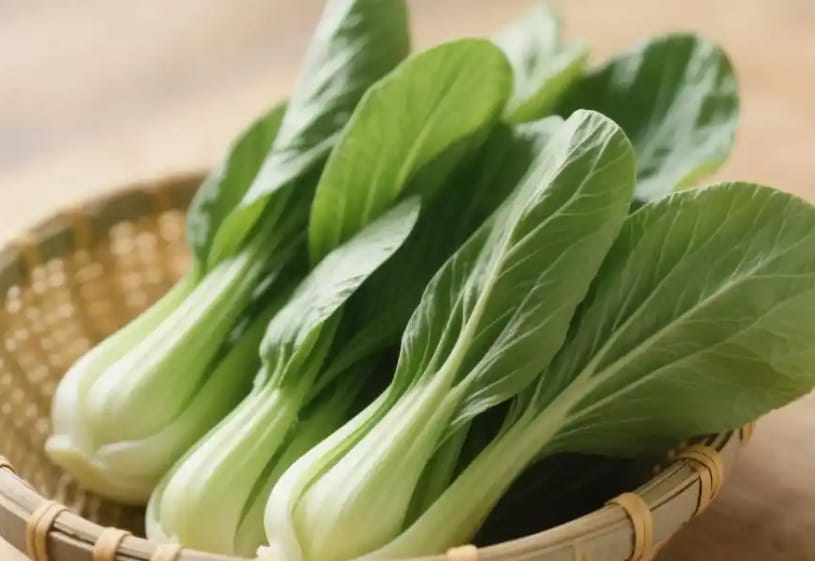
It is not recommended to use compound fertilizers for foliar fertilization of vegetables, as it is directly related to their physical properties and crop absorption efficiency.
Foliar fertilization is the direct absorption of nutrients through leaf stomata and cuticles, requiring fertilizers to be completely water-soluble, with extremely fine particles and no insoluble substances. Compound fertilizers usually contain fillers and binders, which are not only difficult to completely dissolve, but also prone to clogging the nozzle or forming residues on the leaf surface, affecting absorption and even causing fertilizer damage.
1. Solubility issue
In order to form the compound fertilizer, a binder (such as kaolin) will be added. These substances are insoluble in water, which will easily block the nozzle of the spray after spraying, and form white residues on the leaf surface, blocking nutrient absorption. The Ministry of Agriculture and Rural Affairs’ “Water soluble Fertilizer” (NY 1107-2020) standard clearly requires that the water-insoluble content of foliar fertilizers be ≤ 5%, but compound fertilizers generally do not meet this standard.
2. Concentration and burn risk
The ion concentration of compound fertilizer is high, especially for high potassium or high nitrogen types. Directly spraying it with water can easily lead to excessive local salt content and burn the leaves. Especially the tender leaves of melons and eggplants are highly sensitive to salt, which can lead to symptoms of phytotoxicity such as burnt edges and yellowing.
3. Low absorption efficiency
The phosphorus element (such as diammonium phosphate) in compound fertilizers is difficult to absorb on the leaves, and the efficiency of phosphorus absorption through the leaves is much lower than that through the roots. The core of foliar fertilization is to quickly supplement trace elements and a small amount of urgently needed nitrogen and potassium, while the nutrient ratio of compound fertilizers is fixed and cannot be flexibly adjusted for nutrient deficiency.
If it is necessary to supplement nutrients through foliar application, specialized water-soluble fertilizers should be selected:
• Large element water-soluble fertilizer: Choose high-purity and fully water-soluble types, such as potassium nitrate and potassium dihydrogen phosphate, and spray at a concentration of 0.2% -0.3%
• Medium and trace element fertilizers: chelated calcium, magnesium, iron, zinc, etc., with high absorption efficiency and good safety
Functional foliar fertilizer: a water-soluble fertilizer containing amino acids and alginate, which can enhance stress resistance and promote nutrient absorption
Attention should be paid to spraying in the evening or on cloudy days to avoid strong light evaporation, which can cause the fertilizer to dry too quickly and affect the absorption effect. When spraying, ensure that the front and back of the leaves are evenly moist, with the degree of no dripping on the leaves.